


Biography
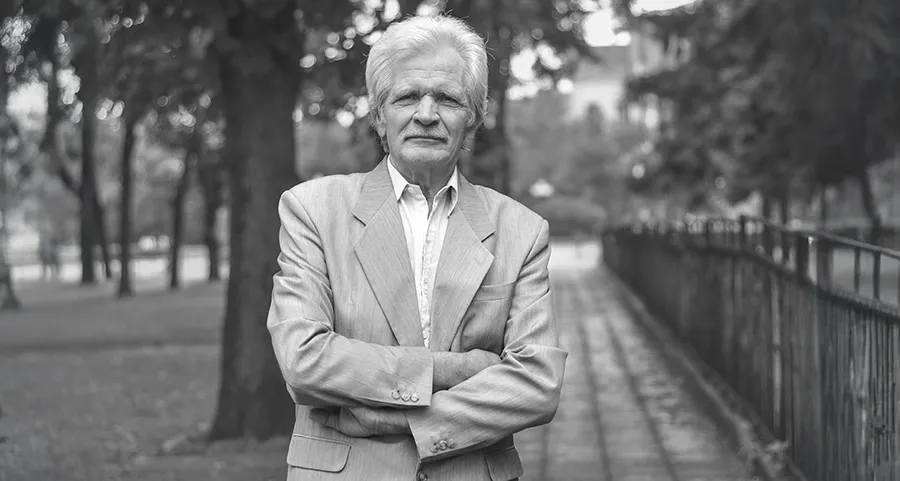
Vladas Terleckas was born on September 13, 1939, in the beautiful old village of Krivasalis, surrounded by lakes (and mentioned in written sources dating back to 1612). His parents, Teklė and Pranas, were small farmers who owned 4 hectares of arable land. They raised their sons Antanas, Jonas, and Vladas. His parents, Teklė and Pranas, were small farmers who owned 4 hectares of arable land.
From 1946 to 1951, he attended Krivasalis Primary School, and from 1951 to 1958, he attended Linkmenys Seven-Year School (which was reorganized into a secondary school in 1995). Because his eldest brother Antanas was convicted of anti-Soviet activities, Vladas was denied admission to Vilnius State University in 1958 and to Vilnius State Pedagogical Institute in 1959.
From 1958 to 1961, he worked in the fields in Kazakhstan, at a timber company in Karelia, and as a laborer, surveyor, and foreman at an organization that carried out reconstruction work on the runway at Vilnius Airport.
From 1961 to 1966, he studied banking at the Faculty of Economics of Vilnius University. He led a student research group and won a country-wide competition for his scientific work and awarded a diploma. Upon graduation, he was appointed to work at the city-wide board of the Lithuanian SSR State Bank.
In the fall of 1967, he was invited to teach banking to students at Vilnius University. He worked as a teacher for 33 years until retirement age. In 1976, he defended his doctoral dissertation at the Leningrad (now St. Petersburg) Institute of Economics and Finance. It was only in 1986 that he was awarded the title of associate professor. He organized an exhibition of securities and banknotes at Vilnius University. He taught courses on money circulation and credit in capitalist countries, money circulation and credit in the USSR, the history of money and banks in Lithuania, and trade finance. He gave lectures to students at the Cooperative Technical School and to participants in various courses.
In 1989, he was appointed head of the Lithuanian Independent Monetary and Credit System Creation Agency that was instituted by the law-drafting body called the Economic Reform Commission of the Council of Ministers of the Lithuanian SSR.
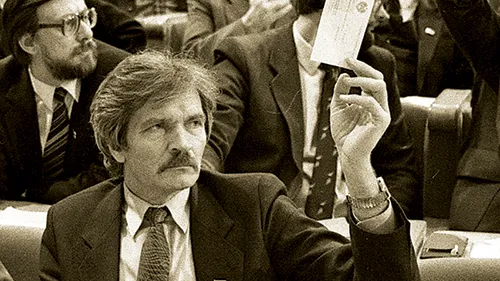
In 1990, he was elected a member of the Supreme Council and voted for the Act of Restoration of Independence of Lithuania. However, he chose teaching at Vilnius University as his main occupation. He actively participated in the discussion of certain economic issues in the Supreme Council. He made a significant contribution to stopping the rise in food prices in 1991, prevented the prime minister from selling the gold belonging to the pre-war Bank of Lithuania, prevented the liquidation of the Bank of Lithuania in 1991, and helped to preserve Soviet banks in Lithuania, among other things.
Furthermore, he advised the management of the Bank of Lithuania, headed the Training Department of the Lithuanian State Commercial Bank, and was a member of the Securities Commission.
He headed the Lithuanian Independence Defense Fund (1991–1993).
Upon intensive and productive research into the history of banking and money in Lithuania, he published six monographs on the topic and was awarded the Prof. Vladas Jurgutis Prize in 1992, 1999, and 2012.
In his books The Rewriting of History and the Relishing of Backwardness (2007) and Challenging the Falsification and Disparagement of Lithuania’s History (2009), he sought to expose a revisionist distortion of the historical record.
His definitive work, Resisting the Crucifixion of Lithuania 1944–1953: Myth and Reality (2017), is the objective examination of the history of those years. In order to disabuse the West of some of its misconceptions regarding Lithuania’s experience of World War II and its post-war Stalinist years, he also wrote The Tragic Pages of Lithuanian History 1940–1953, which was published in English (2014) and in French (2016). In total, he has published nearly 600 different publications.
In 1992, he donated the compensation he received from the Supreme Council (approximately 24–25 thousand talons) to the Betanija soup kitchen, which is supported by the Diocese of Vilnius.
In 1997, on his family’s initiative and at their expense, he erected a monument to the partisans of his homeland in the Krivasalis cemetery.
He was awarded the Independence Medal (2000), the Commemorative Medal for the Development of Lithuania’s Transatlantic Relations (2003), the Knight’s Cross of the Order for Service to Lithuania (2010), the Gabrielė Petkevičaitė Medal for Service to Lithuania (2017), the Medal for Distinguished Serivce to Vilnius and the Nation (2019), and the Officer’s Cross of the Order for Service to Lithuania (2020).
He died on September 6, 2024, in Vilnius and was buried in Antakalnis Cemetery.
Videos


A meeting of VLADAS TERLECKAS with the brothers of the Tiberias community

English translation by Jūratė Vaičėnaitė and Jonas Baltrus
Articles
2025
10 20
Review: ‘The Tragic Pages of Lithuanian History’ by Vladas Terleckas
Author:
Francis Young
